
Contact Us Today312-702-1293

How Does Illinois Handle Child Custody Matters For Same-Sex Couples?
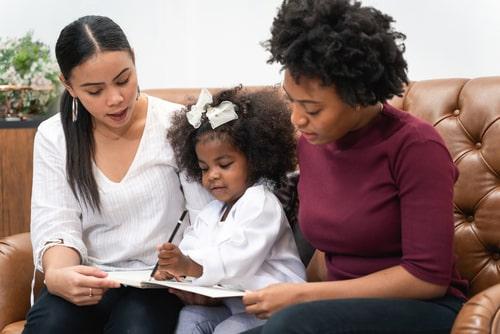 When same-sex parents separate, questions can arise about how custody will be handled. Illinois uses the same child custody standards for same-sex parents as for other parents.
However, each person’s legal relationship to the child must be clear. If you are facing a custody dispute in 2026, a Joliet, IL child custody attorney can help you understand your rights and protect your relationship with your child.
What Custody Rights Do Same-Sex Parents Have in Illinois?
Same-sex parents who are legally recognized as parents can seek physical and legal custody. In Illinois, custody is called the allocation of parental responsibilities and is divided into parenting time (visitation) and decision-making responsibilities (legal custody). A parent’s sexual orientation does not give them fewer rights, and a biological parent does not automatically have greater rights than a non-biological legal parent.
These rights do not guarantee a particular custody arrangement or equal parenting time. The court decides how to divide time and responsibilities based on the child’s best interests.
When Is a Same-Sex Spouse Presumed to Be a Child’s Parent in Illinois?
Under 750 ILCS 46/204, a person is generally presumed to be a child’s parent if they gave birth to the child or are married to the person who gives birth when the child is born. This applies to same-sex spouses, even when one spouse has no biological connection to the child.
For example, if a married woman gives birth through donor insemination, her wife is generally presumed to be the child’s other parent. The presumption also applies to civil unions and covers children born within 300 days after a marriage or civil union ends.
Can an Unmarried, Non-Biological Parent Establish Parental Rights in Illinois?
An unmarried person can become a child’s legal parent through adoption or by meeting Illinois’s rules for assisted reproduction. Under 750 ILCS 46/703, a person who consents to assisted reproduction, such as donor insemination or IVF, with the intent to be a parent is a legal parent.
That consent can be shown through a record signed by both intended parents or an agreement made before conception that both would be parents. Even without either form of consent, a court may recognize someone as a parent if they lived with the child for the first two years of the child's life and openly treated the child as their own. Once legally recognized as a parent, the person can request parenting time and a role in major decisions about the child.
Can You Get Custody if You Helped Raise the Child but Are Not a Legal Parent in Illinois?
Helping raise a child does not automatically create the same custody rights as legal parentage. The first step is to determine whether the law already recognizes you as a parent or provides a way to establish parentage. Useful documents include:
- Adoption judgments or existing parentage orders
- Marriage or civil union records
- Fertility treatment consent forms
- Agreements showing an intent to raise the child as parents
If no parentage route applies, Illinois allows certain nonparents to seek parenting time and decision-making responsibilities under limited circumstances. Those rules do not give every former partner a right to contact.
How Do Illinois Courts Decide Parenting Time for Same-Sex Parents?
Under 750 ILCS 5/602.7, judges decide parenting time based on the child’s best interests. Regardless of the parent's sexual orientation, they consider each parent’s relationship with the child and history of providing care.
Other factors include the child’s needs and adjustment to home and school. The judge also considers whether each parent supports the child’s relationship with the other parent and whether there are safety concerns.
Who Makes Major Decisions About the Child After Separation in Illinois?
The parenting plan or court order assigns responsibility for major decisions. These decisions cover education, healthcare, religion, and extracurricular activities.
Parents can share these decisions, or one parent can have sole authority. The court can also divide responsibility by category. For example, one parent could make medical decisions while both share school decisions.
Parents can submit an agreed plan for court approval. If they cannot agree, the judge decides which arrangement serves the child’s best interests.
Contact an Joliet, IL Child Custody Lawyer
At The Foray Hurst Firm, we help LGBTQ+ parents address custody concerns and work toward parenting arrangements that meet their needs. Our attorneys have more than 30 years of combined experience and work to preserve the dignity of families in transition. We have memberships in the Black Women Lawyers' Association, Black Bar Association of Will County, Cook County Bar Association, and National Bar Association.
Contact our Homewood family law attorneys or call 312-702-1293 to schedule a consultation.

From Our Blog
Contact Us Today
Set up a consultation with us to get legal help with your family law case. Call 312-702-1293 or fill out the form below:
Address
Orland Park, IL 60462
Contact
Social Media


From our office in Orland Park, we serve clients throughout the south and southwest suburbs of Chicago including but not limited to Bolingbrook, Chicago Heights, Country Club Hills, Crest Hill, Flossmoor, Harvey, Hazel Crest, Homewood, Hyde Park, Joliet, Kankakee, Lockport, Markham, Mokena, New Lenox, Plainfield, and South Holland.
Results listed are not a guarantee or indication of future case results.
15255 S. 94th Ave. 5th Floor, Orland Park, IL 60462
312-702-1293